
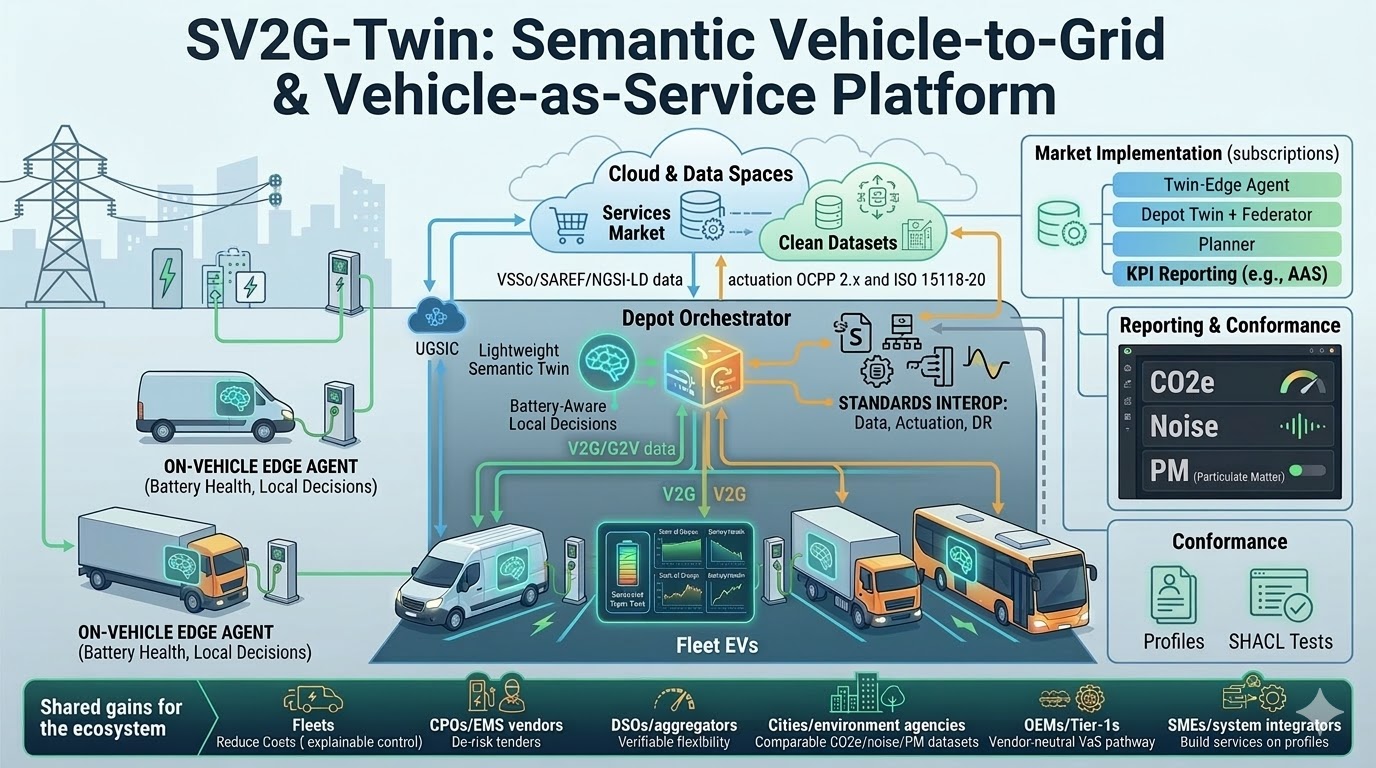
SV2G-Twin links EV twins, depot orchestration, and grid interaction with standards-first interoperability.
SV2G-Twin turns fleet electric vehicles into safe, software-defined energy assets that interact intelligently with depots and the grid. Each vehicle hosts a lightweight semantic twin that makes battery-aware local decisions, while a depot orchestrator coordinates charging, discharging, and demand-response at fleet scale.
The project is built on open standards to reduce integration risk and avoid vendor lock-in:
Data semantics: VSSo, SAREF, NGSI-LD
Actuation: OCPP 2.x and ISO 15118-20
Demand response: OpenADR
Reporting: ISO-23795-1 extension for EVs and additional pollutants (noise/PM), with machine-readable datasets and AAS KPI packs.
Market adoption is designed to be practical. Containerised modules (Twin-Edge Agent, Depot Twin + Federator, Planner, and ISO-23795-1 Extension Pack) are offered as subscriptions per depot, vehicle, and connector. An open-core interoperability kit plus optional city/CSR data subscriptions supports broad partner-led delivery.
Conformance-as-a-service (profiles-as-code + SHACL tests) can compress onboarding from months to days. Fleets cut peaks and energy costs with explainable, battery-safe control; CPOs and EMS vendors de-risk tenders through executable interoperability; DSOs/aggregators receive verifiable flexibility; and cities gain comparable CO2e/noise/PM data to guide policy and sustainability reporting.
Proven in Timișoara, SV2G-Twin is engineered for replication—from one depot to many, and from one country to EU-wide rollout—without re-engineering the core architecture.